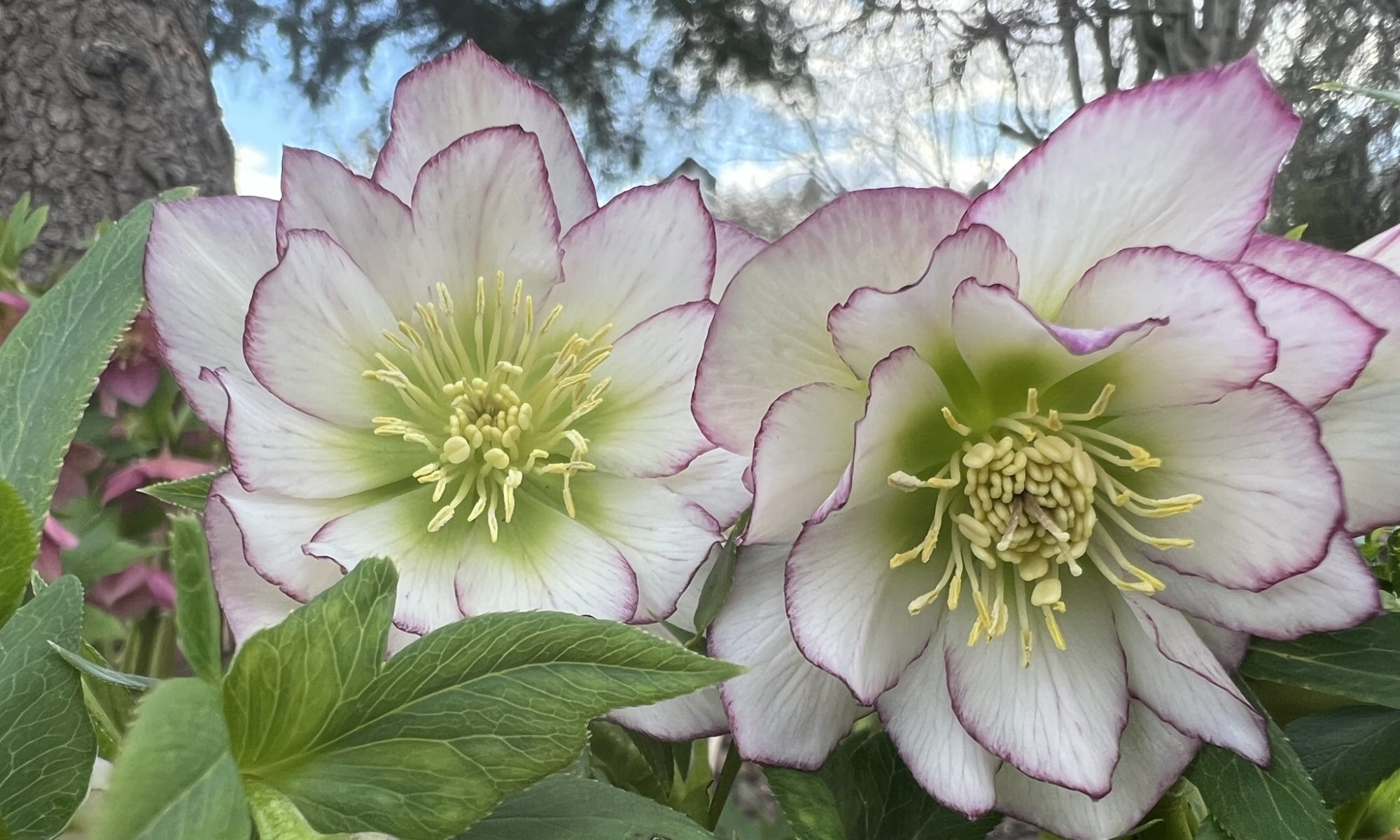

Why wait until May to plant your containers? I keep mine going all year long. By early to mid-March, I’m already pulling out winter greens and tucking in cool-season flowers that don’t just tolerate the cold—they thrive in it (see my favorites below with frost tolerance). When summer containers start to look tired in early fall, I switch them out again for another round of cool-weather plants, followed by winter branches and berries. It’s a simple rhythm that keeps cool season container plants looking beautiful and transitioning through the seasons.

With so many annuals and perennials that thrive in the lingering chill, I can’t resist filling at least a half dozen containers with fresh combinations each spring. By that point, I’ve traded coats and scarves for lighter layers and am completely starved for color. Planting these early containers feels like waking the garden—and myself—back up after a long winter.

If you plant your containers in mid-March, around St. Patrick’s Day, the plants will be in place for 6-8 weeks before you need to replace and freshen with heat loving ones.

Step By Step Pointers
Here are some pointers on making those early spring ventures as successful as possible. First, acclimate your transplants to the cold as any plants you buy will have been grown in greenhouse conditions where they aren’t exposed to harsh outdoor weather. This is called ‘hardening off’.

Using a cold frame is an easy way to accomplish this. Alternatively, you can place your plants in an unheated garage or porch area for at least a week. You don’t want your expensive new plants to react to the sudden shift of temperatures by succumbing to cold winds and freezing temperatures. Flowers, rather than foliage, are the most susceptible to cold.
Last year, I had a cold snap in April where the nighttime temps went down to about 29 degrees. I placed a frost protection plant cover over my containers and they sailed through without any problems. Breathable and light, you can tent it over the container to conserve heat. Another method of shielding your containers from cold and wind is to place them in a sheltered position, next to a wall or house. I really like using thick covers that are easy to put on and remove with one zip. But wrapping and clipping together tour row cover works fine.

Transitioning Your Containers

Transitioning your containers from one season to the next doesn’t mean you need to rip everything out and start at ground zero. Some plants will look good all year long and can act as base plants that you can leave in most of the year like Ivy, Creeping Jenny, Yucca, Coral Bells, Ajuga, and a variety of other perennials, like spring blooming Scabiosa or Pin-Cushion plant, Sedum, and Nepeta. I love using Evergold Carex, an evergreen Japanese Sedge, that looks good any season and drapes over the edge and the multi-colored Coral Bells, that works as a foliage accent.

And don’t forget the vegetables and herbs! Parsley, Swiss Chard, Ruby Red lettuce, Bull’s Blood beets, Dusty Miller, and Cabbages are all great cold hardy foliage colors to add different hues and shades to the more exciting flowers.

Design Principles
The same design principles you use in summer apply just as much to cool-season containers:
Use Contrasting Textures and Colors
Combine plants with different leaf shapes and textures—pairing fine with bold, glossy with matte. Layer shades of green with touches of burgundy and silver, and incorporate evergreens, ornamental grasses, and colorful foliage to create depth and interest.
Create Height and Layers
Think in tiers. Place taller plants toward the center (or back, if against a wall), then surround them with mid-height plants and trailing or low growers to soften the edges and complete the composition.
Establish a Focal Point
Every container benefits from a strong centerpiece. A structural plant like yucca or coral bells beautifully, or even a decorative element, to anchor the design and draw the eye.
Add Seasonal Accents
Finish with seasonal touches that reflect the moment—pussy willow or curly willow branches, red or yellow twig dogwood, bird nests, or even colored glass spheres. These details add personality and make the container feel intentional and complete.


🌿 Cool-Season Container Formula (At a Glance)
Thriller (Height / Structure)
Choose a strong vertical element to anchor the container:
- Ornamental cabbage or kale
- Yucca or cordyline
- Dwarf evergreen (boxwood, small conifer)
- Upright grasses
- African Daisy (Osteospernum)
- Coral Bells (comes in a rainbow of colors and is quite frost resistant)
Filler (Body / Color)
These create fullness and seasonal color:
- Pansies and violas
- Dusty Miller
- Primroses
- Ranunculus
- Nemesia
- Heather
Spiller (Movement / Softening Edges)
Let these trail over the sides to soften the container:
- Ivy
- Creeping Jenny (Lysimachia)
- Bacopa
- Sweet alyssum
- Sedums (like Angelina)
Seasonal Accents (The Finishing Touch)
Add structure and personality:
- Pussy willow or curly willow branches
- Red or yellow twig dogwood
- Moss, bird nests, or decorative spheres
💡 Pro Tip:
Cool-season containers are more about texture and foliage contrast than big, bold blooms—so don’t be afraid to lean heavily on greens, silvers, and burgundy tones with just pops of flower color.
Well-Draining Soil
Ensure proper drainage in your container to prevent root rot, as excess moisture can be harmful during winter and fertilize. Many times, if you reuse containers from season to season, the drainage holes can get clogged with roots. I use a piece of rebar and poke it into the holes to clear the compaction that keeps water from draining freely.


Hardy Annuals
Hardy annual plants are the most cold-tolerant kind of annual plants. They can handle a slight freeze and colder temps than marigolds and zinnias and are good choices for early fall and early spring plantings. But be careful – A sustained hard freeze though will do them in! And plants that have had time to adjust to increasingly cold weather will be hardier than those that suddenly encounter it. So, don’t forget to harden off your plants.
Most cool season annuals aren’t truly “frost proof” – they’re frost resilient. They may take a hit, but they rebound quickly and continue blooming as temperatures moderate.
🌿 Cold Hardiness Chart for Common Cool-Season Annuals
| 🌸 Plant | ❄️ Cold Tolerance | 🌿 Notes |
|---|---|---|
| 🤍 Bacopa (Sutera) | ~28–32°F | Light frost OK; repeated or hard freezes will damage |
| 🌼 Bellis (English daisy) | ~25–30°F | Very cold tolerant; great early color and structure |
| 🧡 Calendula | ~25–30°F | Quite hardy; often overwinters in mild climates |
| 💗 Dianthus (annual) | ~25–30°F | Very cold tolerant for an “annual”; long-lasting blooms |
| 🌿 Dusty Miller | ~25–30°F | Excellent cold-tolerant foliage plant |
| 🌸 Iceland poppy (Papaver nudicaule) | ~25–30°F | Cold tolerant; thrives in cool weather, fades in heat |
| 💙 Lobelia | ~30–32°F | Tolerates chill, but not hard freezes |
| 🌸 Nemesia | ~30–32°F | Light frost only; can be sensitive below freezing |
| 🌼 Pansies / Violas | 25–32°F | Extremely hardy; can survive freezes and bounce back beautifully |
| 🌺 Petunia (select types, like Wave) | ~30–32°F | Surprisingly frost-tolerant, but not prolonged cold |
| 🌼 Ranunculus | ~25–28°F | Tolerates mid-20s°F; protect below ~25°F |
| 🌺 Snapdragons | ~28–32°F | Handle light frost well; great early height |
| 🤍 Sweet Alyssum | ~28–32°F | Frost tolerant; may show minor cosmetic damage |

Ranunculus is a beautiful rose look alike

This list is by no means inclusive of all annuals that thrive in cool temperatures, but it offers a good selection of colorful and easy-to-grow flowers.

Claire Jones is a Maryland-based garden designer, horticulturist, and writer with more than 30 years of hands-on experience. She is the author of The Beekeeper’s Field Guide and the forthcoming The Garden Bible (HarperCollins, October 2026), and the creator of the gardening blog The Garden Diaries.

Wonderful post with so many great ideas!!
Thank you!
Good advice! I try to keep up with my front porch pots through the seasons, but I admit I need to improve in the late winter season. You’ve given me some motivation to do just that! I think I’m going to start out by transplanting some Hellebore stragglers into the porch pots. The evergreen foliage is so wonderful, and they’ll bloom during that frustrating time when a potential freeze keeps me from planting out annuals. Great post!
Sigh, I live in the equatorial area and most of the year it is just green leaves, green leaves and more green leaves! I love them. But I love flowers too. At the moment, the tropical trees are blooming after the monsoon season and I am so happy to see these rare blooms! I love the container flowers that you posted. So pretty.