
What to look for in the garden after winter: check plants, soil, wildlife, winter damage, and the first spring tasks after snow melts.

Weeks of extreme cold, ice, and snow, when I see the first bare ground it feels like a turning point. Most gardeners walk outside and immediately feel the urge to clean up. My garden looks flattened, brown, and honestly a little discouraging, and it’s hard not to assume something went terribly wrong over the winter. And something did! We got weeks of snow, ice, and unrelenting cold temperatures which is very unusual for my mid-Atlantic region. Casting my eyes up to my meadow around the beehives, everything has been flattened and dead stems stick up out of the remaining slurry of snow.

But before you pick up pruners or a rake, slow down. Late winter isn’t cleanup season — it’s inspection season. This short window between snowmelt and real spring tells you a lot about how your garden actually came through winter, and more importantly, what you should leave alone.

Frost Heave
The first thing I always look for is frost heave. Our winters rarely kill plants outright, but the freeze-thaw cycles can push them right out of the ground. Once the snow melts, you’ll sometimes notice perennials sitting higher than they were in fall, leaning sideways, or showing exposed roots. Walking along my perennial bed I see a few plants have popped up, especially newly planted ones in the past year and I gently press them back into place with my hands. A few allium bulbs are exposed and I covered them with soil. Don’t stomp frozen ground and don’t mulch yet — they just need contact with the soil again.

Evergreen Burn
Next comes the annual panic over evergreens. Arborvitae turn bronze, boxwoods look cooked, and rhododendron leaves curl tightly. Most of this is winter burn, not death. The ground was frozen while sun and wind kept pulling moisture out of the leaves. If branches are still flexible and buds are firm, the plant is very likely alive and will recover slowly once the soil warms. What looks terrible in March often looks perfectly normal again in May, so resist pruning right now.

Broad-leaved evergreens are especially susceptible to winter burn due to dehydration when the roots cannot replace winter water loss from foliage. Rhododendron, Azalea, Mountain Laurel, Cherry Laurel, Southern Magnolia, and Holly are very susceptible to this. Avoid planting these where there are unprotected winds blowing through. No help this year, but you might consider applying anti-desiccant sprays such as Wilt-Pruf that apply a wax coating that helps seal in moisture next fall before going into winter. My go-to for any plant problem is Penn State Extension and this article on Preventing Winter Burn on Evergreens is excellent.

One winter, a client’s front boxwoods took the full force of snow sliding off the roof. The shrubs were already carrying a heavy load, and the falling snow literally split them apart. If this happens, prune away any broken branches — the bent ones will usually recover on their own. I’d wait until late winter or early spring to do the cleanup. This is one situation where gently brushing off fresh, soft snow with a broom can help, though when ice follows quickly, it’s nearly impossible to prevent damage. For the future, consider wrapping the plants in burlap or loosely tying them with twine to keep them from splaying open. Even severely damaged boxwoods can often be saved with rejuvenation pruning, cutting them back to about 12–18 inches in early spring.

For damaged conifers, once new growth appears, prune out any completely dead, dry, or broken branches to encourage new, healthy growth. Water if the soil is dry and not frozen to prevent further needle loss. If the needles on a branch are brown but the twig is still flexible, the branch is likely to survive and put out new growth.
Tulips and Other Bulbs
As the snow disappears you’ll also start to notice feeding damage from winter wildlife. Snow acts like a ladder for rabbits and rodents, and suddenly the lower bark of shrubs and young trees looks chewed or tulip bulbs have vanished. Squirrels have an excellent sense of smell and I think they can smell tulip bulbs a mile away!! They must be quite tasty and after a long winter the squirrels are hungry. To deter these pests which run rampant on my property, I sprinkle cayenne pepper, hot sauce, or anything that is strongly scented on top of my tulip plantings.
Many of my larger tulip planting areas are protected with hardware cloth that was fastened to the ground with soil staples in the fall, but I have random groupings of tulips that get the pepper application. This needs to re reapplied every few weeks. Daffodils thankfully are poisonous, containing toxic alkaloids which make them taste bitter, and are immune to this digging. Allium bulbs are also immune to predation. And I have seen some hyacinth bulbs dug up but rejected as they supposedly taste terrible. Tuck these back in.

Pruning
Don’t rush to prune. Hydrangeas especially are slow to leaf out after a hard winter. As the snow melts and the garden reappears, resist the urge to immediately start cutting everything back. Early spring pruning should be selective, not aggressive. First remove only what is clearly dead — stems that are brittle, hollow, broken, or fail the scratch test. Leave anything with buds or green tissue; many plants delay growth after harsh winters and will recover with warmer temps returning. Wait to prune spring-flowering shrubs such as lilac, forsythia, and azalea until after they bloom, or you will remove this year’s flowers. Summer- and fall-blooming shrubs, like the Panicle Hydrangea Limelight, however, can be shaped soon while they are still dormant. And most importantly, keep last year’s perennial stems standing for a little longer — they shelter overwintering pollinators that are only just beginning to emerge as temperatures rise.
Salt Damage
Take a look along driveways and sidewalks as well. Salt injury shows up early — often before leaves even emerge. You may see dead lawn edges or one-sided damage on shrubs closest to the pavement. Once the ground thaws enough to drain, a deep soaking helps flush salts away from the roots before spring growth begins. check out this article from Iowa University on Using Deicing Salts in the Home Landscape.
Skip the Salt and Benefit the Birds
Even better- skip the salt. A handful of barn grip, chicken grit, or coarse sand won’t melt the ice, but it gives instant footing and won’t burn lawns or garden beds along the walkway. Barn Grip is an old farmer’s trick that I purchase locally. Instead of melting ice, Barn Grip provides traction. This environmentally friendly limestone product clings to snow and ice, giving secure footing for livestock — and for us gardeners navigating winter walkways without harming soil, plants, or wildlife.
Sold in 50 pound bags, I used a lot of it this winter and couldn’t have made my daily trips to my greenhouse without it. Another benefit….Barn Grip made from crushed (not powdered) limestone is actually beneficial to many birds. They pick up the tiny angular particles and store them in the gizzard, where the grit helps grind seeds and hard food. The calcium in limestone can also support eggshell formation in late winter and spring. It won’t hurt your pets paws either… a win, win!
One of the most important things you can do at this stage is actually nothing at all — especially when it comes to soil. Melting snow reveals drainage problems, and the ground is usually saturated. If you step in a bed and your footprint stays visible, back out. Walking on wet soil compacts it for the entire growing season and does more long-term harm than anything winter just did.

Under the Soil
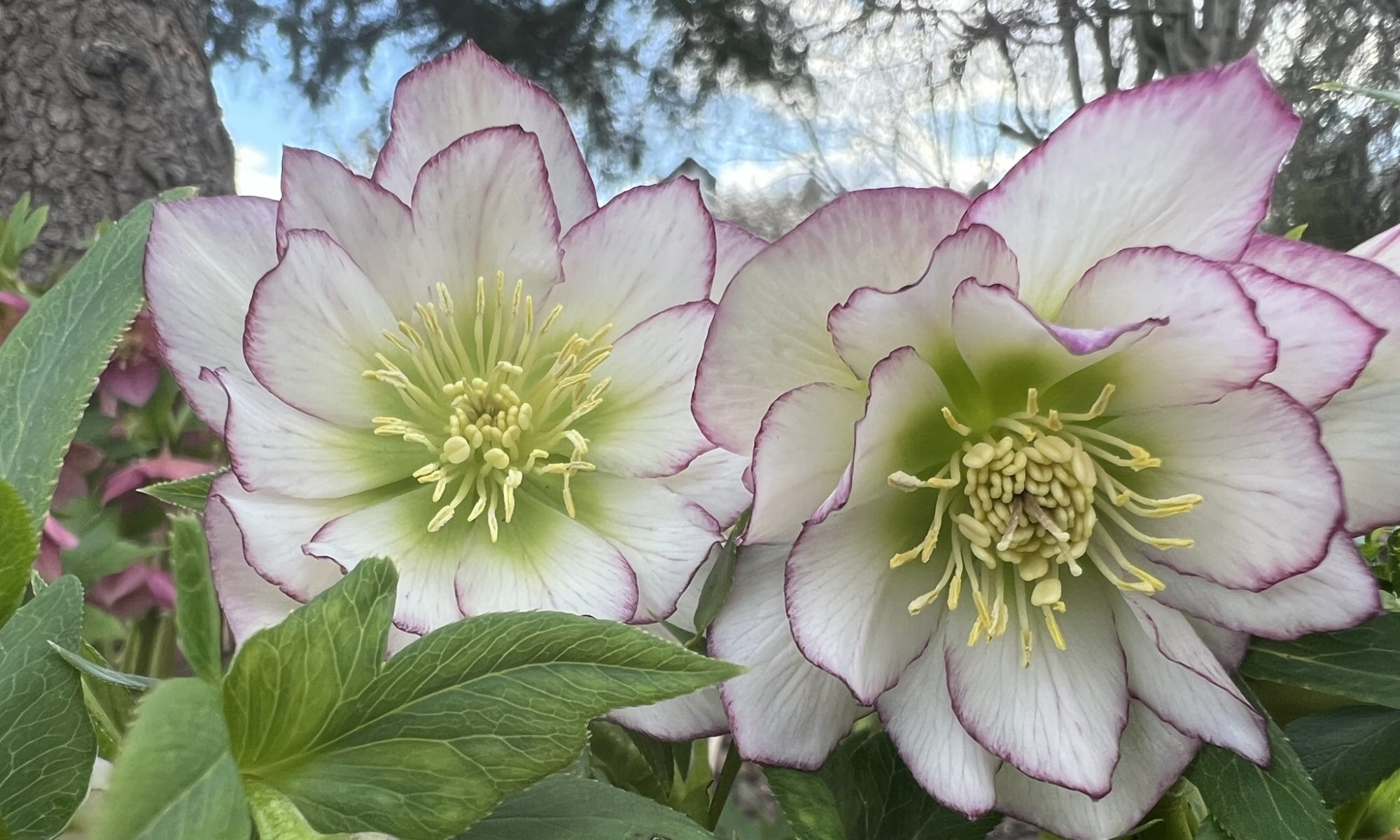
You’ll also start noticing subtle signs that the garden is waking up long before it looks like spring. Buds swell, daffodil tips push upward, hellebores emerge through old leaves, and earthworms begin working near the surface. Not all earthworms survive winter the same way. Surface-dwelling worms (the small leaf-litter species) die back each year but leave behind cold-hardy cocoons that hatch in spring. Mid-soil worms retreat below the frost line and slow their metabolism, essentially overwintering in a dormant state. The deep burrowers — the large nightcrawlers — tunnel far down into unfrozen soil (up to 6 feet!), sealing the entrance with soil plugs and waiting out the cold in stable temperatures.
Even when the garden looks frozen and lifeless, the soil community is still very much alive, simply operating on winter terms. Once the freeze starts to thaw, they start to move up. Mulching the soil can insulate the ground which will further protect your earthworms and ensure that more of them survive. Another great plus for mulch! The garden restarts underground weeks before we see it above ground. A great article on earthworm survival is Do Earthworms Survive Winter? by Joe Lamp’l.

Winter Life Inside the Compost Pile
Even when the garden appears frozen and lifeless, a working compost pile is quietly active. As microbes break down organic matter they release heat, creating a protected pocket where earthworms can survive winter. The outer layer of the pile often freezes, but the interior stays just warm enough for life.
Instead of burrowing deep underground, worms migrate into the pile and cluster in the middle — the warmest zone. They slow down, but they do not truly hibernate. They continue feeding and leave behind nutrient-rich castings that will be ready for you in spring.
If a pile freezes solid during extreme cold, the adult worms may die, but their cocoons are remarkably hardy and survive until warmer weather. When temperatures rise, the next generation hatches and repopulates both the compost and the surrounding soil.
This is why gardeners often find their first earthworms of the year in the compost pile — it functions as a winter refuge and a biological reservoir for the entire garden.
Tip: A thick cap of leaves or straw on top of your compost pile helps trap heat and dramatically improves winter earthworm survival.


For beekeepers, this is also the moment of truth, and you don’t need to open the hive to find out how things went. Stand beside the hive and gently knock. A living colony responds with a brief rising hum that fades after a second or two. On the first mild day around 45–50°F, watch the entrance. A few bees flying in circles and small spotting in the snow are good signs — those are cleansing flights. If several warm days pass with no activity, the colony likely didn’t survive. You can also carefully lift the back of the hive. If it feels very light, they may still be alive but running out of food, which is actually a more common late-winter loss than cold itself.

I had access to a thermal camera early in the winter before the frigid temperature really hit us and it showed both of my hives alive and near the top of the hive. But with the severe cold, things could change for the worse. Once the temps reach at least 50 degrees F, I will be watching the entrances of my hives to see if any bees emerge for cleansing flights.
The hardest part of this time of year is restraint. Don’t cut everything down, don’t rake leaves away, don’t fertilize, and don’t divide plants yet. Right now the garden is still deciding what survived. Early cleanup often removes insulation and habitat and can cause more damage than winter ever did.
The First Walk — What to Look for When the Snow Melts
Before cutting, raking, or “fixing,” take one slow lap around the garden.
This walk is diagnostic, not decorative. Winter leaves clues — and if you tidy too soon, you erase the evidence that explains summer problems.
🌱 1. Start with the Soil
Look at the ground before the plants.
Check for:
-
⬆️ Frost heaving (crowns pushed upward)
-
💧 Waterlogged or sour-smelling areas
-
🧊 Ice-sheeted zones
-
🐭 Animal tunnels and vole runs
-
🚶 Compacted snow piles near paths and driveways
Why it matters:
Most spring losses come from winter moisture and suffocated roots, not cold temperatures.
Do not mulch yet — cold soils need air.
🌳 2. Examine the Garden’s Skeleton
Study trees and shrubs next.
Look for:
-
☀️ Split bark on the south or southwest side
-
❄️ Broken branches from snow load
-
🦌 Deer browse height lines
-
🟤 Bronzed evergreens (often cosmetic, not fatal)
If a twig is green inside (scratch with your fingernail), the plant is alive — even if it looks terrible.
🌼 3. Check the Crown Plants (base of the plant)
These reveal true winter damage.
Inspect moisture-sensitive perennials first:
lavender, salvia, gaura, heuchera, coreopsis, penstemon
Signs:
-
✔️ Firm crown = alive
-
⚠️ Mushy crown = rot
-
🕳️ Hollow center = freeze-thaw injury
Do not cut back yet — old growth protects from late freezes.
🌷 4. Watch the Bulbs
Bulbs indicate soil temperature, not calendar date.
-
❄️ Snowdrops: soil thawed
-
🌤️ Crocus: roots active
-
🧹 Daffodils: safe for light cleanup
Burned tips rarely matter.
🐾 5. Read the Wildlife Tracks
Snow records winter ecology.
Notice:
-
🐭 Vole highways around crowns
-
🐰 Rabbit girdling
-
🦌 Deer bedding areas
-
🐦 Bird feeding zones
Wildlife Note:
🐦 Continue feeding birds after snowmelt — late winter is a critical starvation period before natural food sources return. Clean out and repair those old bird houses, set out small twigs, pine needles, moss, and straw pieces for nesting birds if you haven’t done so already. Do not place yarn or string (can wrap around legs, wings, or necks), or pet fur (can contain flea treatments). Refer to my post on Extreme Weather Strategies for the Birds.

Clean out your old birdhouses before the new crop comes along
Golden Rule:
⏳ Wait a few days after snowmelt before working in the garden. Observation prevents misdiagnosis — and prevents unnecessary plant loss.
For more information on preventing and dealing with winter damage, check out this Cornell University article: Winter Damage

Claire Jones is a Maryland-based garden designer, horticulturist, and writer with more than 30 years of hands-on experience. She is the author of The Beekeeper’s Field Guide and the forthcoming The Garden Bible (HarperCollins, October 2026), and the creator of the gardening blog The Garden Diaries.

Thank you, thank you, Claire! Just the information we need as our snow and ice cap here in Maryland starts to melt.
Yes, lets just hope we are seeing the end of our winter blast.
Always enjoy your articles ! Thank you …😊
Thanks Ann! I enjoy writing.
Look forward to reading your artice(s). Beautifully, written with sound advice.
A huge thank you.
You are welcome! Happy gardening!
great article, lots of good advice!