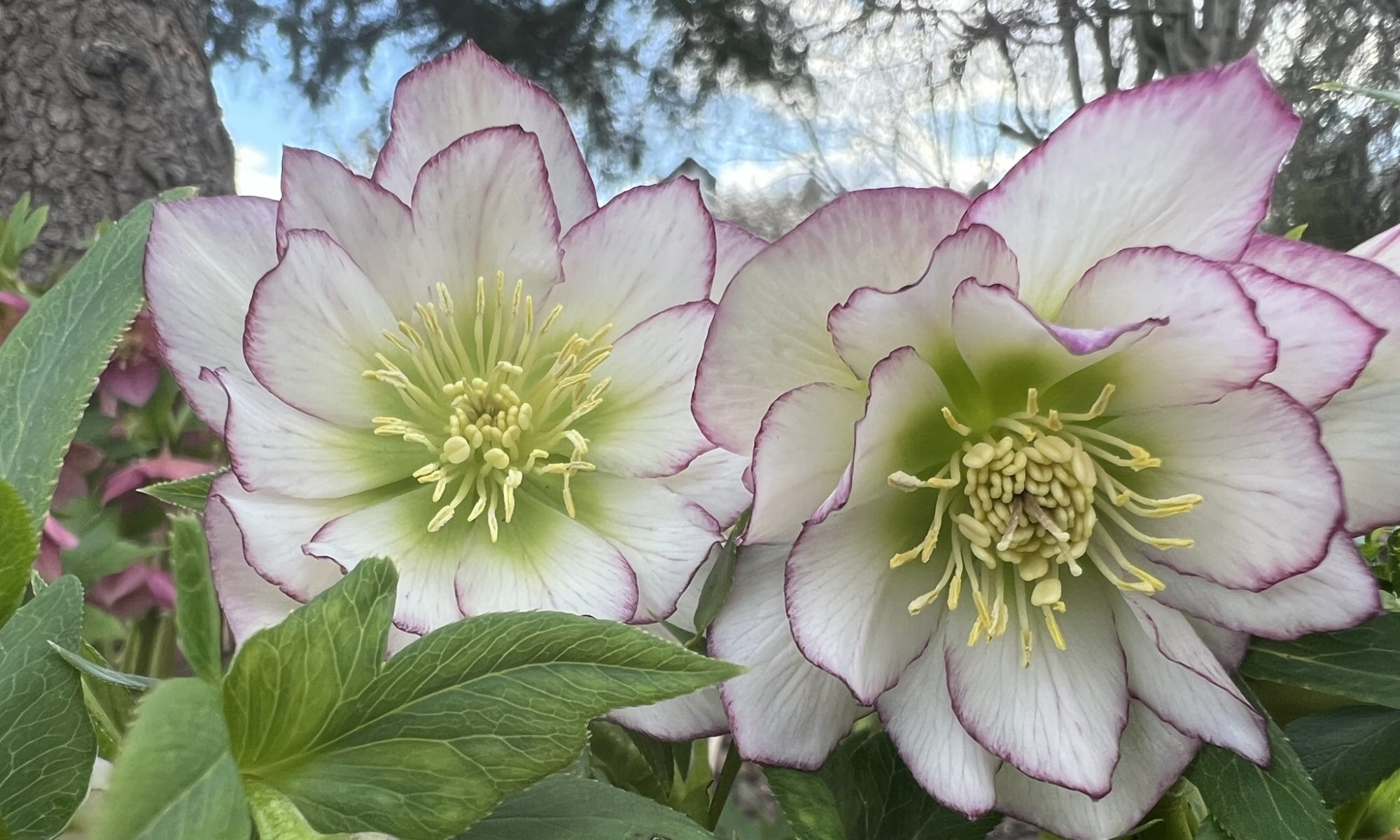

I had the opportunity to visit the legendary gardens, The Lost Gardens of Heligan, in the Spring of 2023, located near St. Austell, Cornwall. One of Europe’s largest garden restoration projects, and on the bucket list for any adventurous gardener, Heligan (means willow tree) is one of the most fascinating estates in England. Also named the garden of the year in 2018 by the BBC, the weather was fine and sunny when I visited on one of my garden tours that I lead regularly with fellow travelers and gardeners.

Check out my next two trips to the Chelsea Flower Show and Spain/Portugal in 2025 by clicking on my trip tabs for the full itineraries and join me!

According to the garden’s website: “Lost to the Brambles of time since the outbreak of WW1, this Sleeping Beauty was re-awakened in 1990 to become Europe’s largest garden restoration project. Today Heligan’s 200 acres are a paradise for the explorer, wildlife, plant lover, and garden romantic“.

Hidden from view until a major hurricane in 1990 revealed their existence, in the early 1990’s, the gardens were gradually brought back to life by Sir Tim Smit, KBE (Knight of the Most Excellent Order of the Empire). He went on to found the famous Eden Project, also in Cornwall. For a full timeline of the history of Heligan, check this website out: The Lost Gardens of Heligan Timeline.

For a fun 2 minute picture montage of the garden, go here.

History
Dating from the 16th century, the gardens were created and improved by members of the Tremayne Family of over 1000 acres. Ancient woodland pathways created over 200 years ago wind through the remaining 200 acres and you can find the famous sculptures, The Giant’s head, Mudmaid, and Gray Lady, along with enormously old rhododendrons and camellias which were granted National Collection Holder Status, for its historic and unique collection introduced to Heligan pre-1920. For more information on Heligan’s National Collection of Camellias and Rhododendrons, check out how these magnificent specimens have matured and can be marveled at today.
Pineapples Anyone??

Amazingly, Europe’s only remaining pineapple pit is at Heligan that was heated with fresh horse manure. Rare and exotic, pineapples were a status symbol in Victorian times. Having a pineapple on your table was a sign of affluence. Unearthed in 1991, horticultural historians researched the history of the technology of growing pineapples in a non-tropical location. Modern gardeners at Heligan put the pit back in working order, learning by trial and error, and after three years of cultivating the plant in the original pit (King Charles came to visit it and admire), they celebrated the first harvest.

The staff ate the first pineapple and the second one was delivered to Queen Elizabeth II on the occasion of her 50th wedding anniversary. Controlling heat and humidity, and frequent changing of the horse manure to keep the heat flowing (fresh manure gives off heat), was necessary for the production of the pineapples. A very labor intensive fruit to grow this way, the pineapple harvest is now shared amongst the staff. A rewarding process for gardeners and visitors alike, unfortunately the pineapples weren’t growing when we were there.
Woodland, Lost Valley, and Jungle Gardens
Among the different gardens are flower and vegetable gardens, an Italian garden, and a wild area filled with subtropical tree ferns towering 40 feet tall, called “The Jungle” – my favorite.
The best part of The Jungle was the 100 foot rope bridge which was tons of fun crossing ( a little scary!) and fits in perfectly with the jungle theme. It almost felt like being in exotic New Zealand!


The Lost Valley has wonderful ponds and wildflowers – bluebells carpet it in the spring – and is home to many ancient trees. All the gardens flow into one another with areas of different character in various design styles. Everything is maintained sustainably and every part of the trees felled are used in new building, charcoal production, as fuel, or a home for wildlife.

During its heyday in the Victorian era before WW1, the garden was maintained by 22 gardeners but with the onset of WW1, 16 of those gardeners perished in the war and by 1916, only 8 gardeners looked after the huge estate. Gradually falling into decay and neglect, the gardens virtually disappeared until a major restoration occurred in the 1990’s that was televised in the UK and became enormously popular.
Thunderbox and The Lost Gardeners
I had no idea what a thunderbox was but discovered it was a privy or a composting toilet. Housed in the Melon yard next to a small building, the Thunderbox room is an official living memorial according to the U.K. National Inventory of War Memorials. The signatures of the gardeners of Heligan House are written in pencil on the lime plaster wall of the Thunderbox room above the portentous date ‘August 1914’ (WWI started at the end of July). Most of them never returned from The Great War. Many country estates across Europe suffered similar losses. For a great article on the ‘lost generation of gardeners’ go to Lost Gardeners of the First World War.


Rare Breeds in the Farmyard
Heligan has been awarded Rare Breed Farm status and is full of heirloom breeds of poultry, sheep, horses, goats, and cattle. The surrounding grasslands are managed with a regenerative grazing rotation, and harvested for fodder for the livestock. Educating and raising awareness of visitors about these rare traditional breeds is a window into the past of farm life.


Victorian Restoration
Serving as a working memorial to Heligan’s Lost Gardeners, the restoration of the Victorian Productive Gardens now produces over 300 varieties of heritage fruit, veg, salad, and herbs to provide the Heligan Kitchen with seasonal produce.


Exotic glasshouse fruits and Victorian crop rotation in the Kitchen Garden offer insight into how things were done in the Victorian era – very labor intensive! Here is how the gardeners were seeding in parsnips in the spring.
Offering lessons in growing your own food, I loved Diggory, the resident scarecrow in the veg garden, who is very photogenic.


Bee Boles

As a beekeeper, I am always curious about hives at places I visit. I found these picturesque old bee boles which are only for show now, but the walls provided shelter for bees necessary for wintering over and are south facing for more light retention. They have removable doors in place to provide extra protection from wind and rain. The doors would have been closed with covers of burlap to add even more protection when it was very cold. These kind of old fashioned skeps are no longer used since the bees would have had to be killed to remove the honey from the skep. Nowadays with the Langstroth hive bodies most people use, you can remove frames, brush off the clinging bees, and remove the honey without destroying the hive. See my post on Spinning Honey to see how we do it today.

This won’t be the last time that I visit. Next time I want to to come in the fall and catch the farm harvests and fall colors.


Very cool ! What a story it tells! My daughter lives in Cornwall and has been there .
Beautiful scenes and fun descriptions! I would love to join you on a trip sometime…maybe in 2026 or 2027. Thanks for sharing some of the highlights!
Beth @ http://www.PlantPostings.com
I am going to Amsterdam in 2026 in the Spring.
Fabulous garden with lots of surprises and spectacular plants. My favorite as well
Need to go back to Cornwall!
Wow, thanks for all the great pictures – lots to look forward to.
Susie